Product Introduction of Silicon Carbide Ceramic Sleeves
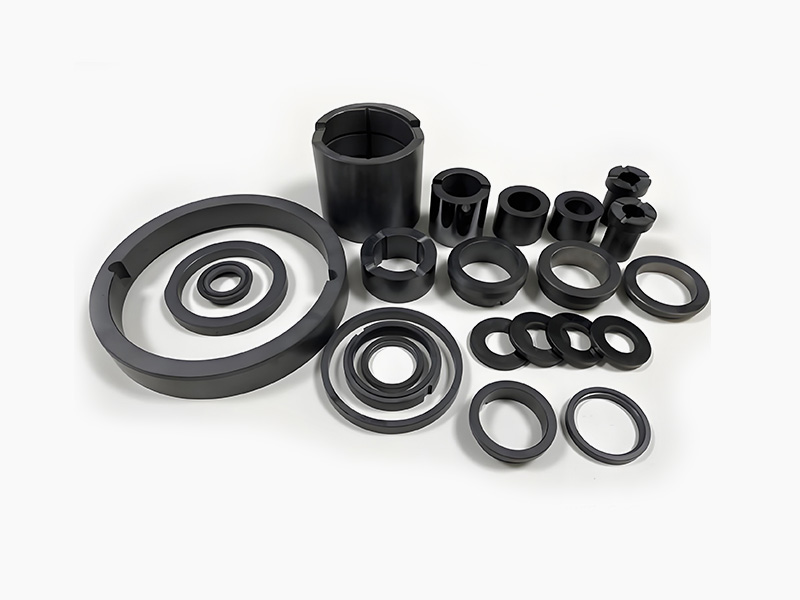
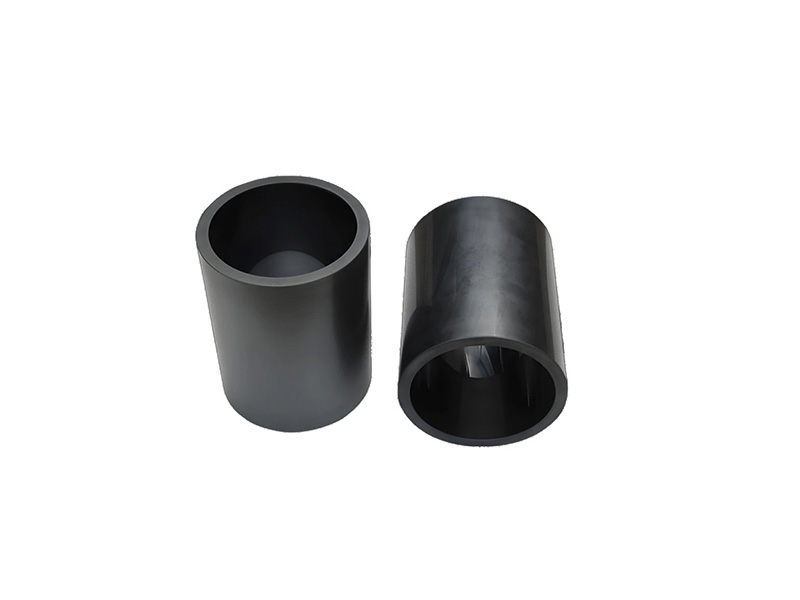
High wear-resistant silicon carbide ceramic sleeves are tubular protective components made from a ceramic material with silicon carbide (SiC) as the main component. Based on the product structure, they are mainly divided into two types:
1. Pure silicon carbide ceramic sleeves: Made entirely of silicon carbide material, possessing extremely high hardness and wear resistance.
2. Composite structure sleeves: The outer layer is a steel pipe, and the inner layer is silicon carbide ceramic, manufactured through centrifugal casting or self-propagating high-temperature synthesis (SHS) processes. They combine the toughness of metal with the wear resistance of ceramics.
3. Silicon carbide ceramics mainly have two crystal structures: cubic β-SiC and hexagonal α-SiC, of which the 6H polytype is widely used in industry.
Technical Parameters and Specifications
The technical parameters of high wear-resistant silicon carbide ceramic sleeves vary depending on the application. Common specifications include:
1. Dimensions: Customizable, common inner diameters include 120mm, etc.
2. Ceramic layer thickness: Typically not less than 25mm.
3. Design life: Up to 30 years.
4. Operating temperature: -50℃ to 1600℃.
5. Density: ≥2.65 g/cm³.
6. Rockwell hardness: ≥HRA 91.
7. Compressive strength: ≥98MPa.
8. Flexural strength: ≥49MPa.
Application Fields
High wear-resistant silicon carbide ceramic sleeves are widely used in the following fields:
1. Chemical industry: Used for conveying corrosive media, such as hydrofluoric acid, with a service life of up to 5 years.
2. Energy sector: Used in high-temperature furnaces, heat exchangers, etc., such as in photovoltaic polysilicon production.
3. Metallurgical industry: Used in continuous casting processes as flow dividers and thermocouple protection tubes.
4. Mechanical manufacturing: Used as mechanical sealing rings and bearing components to improve equipment operating stability.
5. Semiconductor manufacturing: Used in wafer processing as grinding discs and fixtures.
6. Environmental protection: Used in high-temperature flue gas filters and catalyst carriers.
7. Hydrogen energy: Used in hydrogen fuel cell heat dissipation and hydrogen liquefaction devices.
Key Features and Benefits
High wear-resistant silicon carbide ceramic sleeves possess the following superior properties:
characteristic | Specific parameters | Advantages |
hardness | Mohs hardness 9.2-9.6 | Second only to diamond, it effectively resists wear and scratches. |
Wear resistance | Its wear resistance is more than 10 times that of hardened steel. | Significantly extends service life and reduces maintenance frequency. |
High temperature resistance | The operating temperature can reach 1600℃. | It can maintain stable performance even in high-temperature environments. |
Corrosion resistance | Resistant to acids, alkalis, and oxidizing environments. | Suitable for highly corrosive environments such as chemical plants. |
Mechanical strength | Flexural strength: 400-600 MPa | / |
Compressive strength | >2000MPa | Able to withstand high mechanical loads. |
Thermal stability | Coefficient of thermal expansion: 4.0 × 10⁻⁶/°C | High dimensional stability under temperature changes. |
Thermal shock resistance | Capable of withstanding rapid temperature changes. | Suitable for applications with significant temperature fluctuations. |
Supports custom specifications.